Religious Trauma, Spiritual Abuse and High-Control Environment Recovery
Recover. Reclaim. Rebuild.
Not all religious, spiritual, or cultural environments are psychologically safe or supportive of nervous system regulation. Expectations, rules, and relational dynamics can contribute to chronic stress, fear, and hypervigilance.
Here, you can find a spiritually neutral space to reflect, explore and deconstruct the belief systems and expectations that have shaped you. A space to reconnect with your personal values, identity, and self-expression.
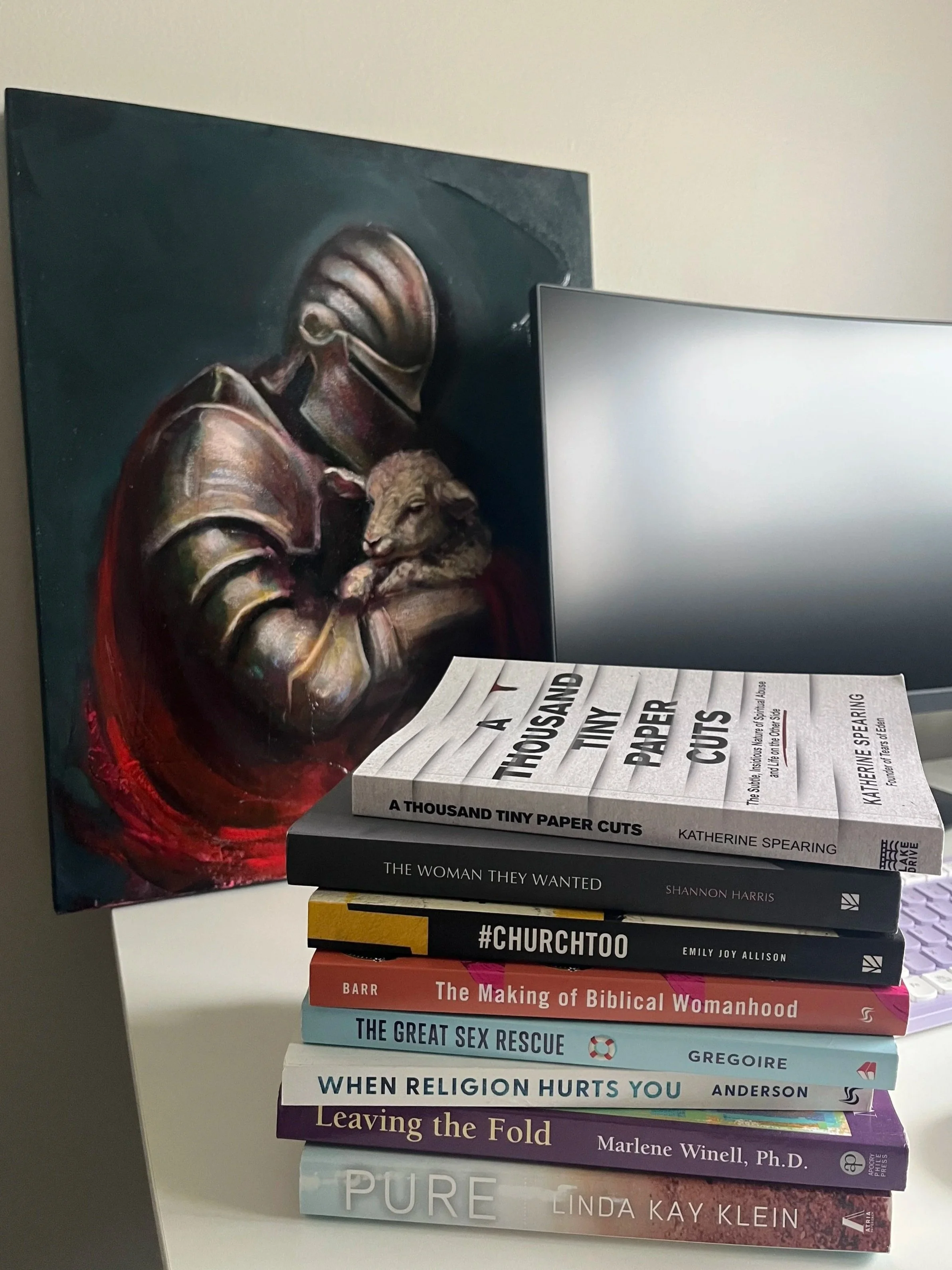
Painting is a Kame’e Alise original, titled “Haven.”
I recognize that religion, faith, spirituality and community can be a powerful source of support, connection and purpose. My approach holds space for both of these realities: the meaningful role these connections can play in our lives, and the potential harm that high-control systems can have on our mental health and well-being.
From Lived Experience to Clinical Practice
My passion for religious trauma, spiritual abuse and recovery from high-control environments is rooted in my personal experience. I spent over 10 years actively involved in Fundamental Evangelical Christianity, with a majority of those years connected to the Baptist Conference. My formative years were shaped by the religious teachings of this community, with limited exposure to perspective and guidance outside of it, due to the high-control nature of the environment.
When you have been taught that questioning the beliefs, customs, norms or traditions of your community is wrong, sinful or even evil, exploring your personal values and developing a sense of identity can be challenging. I understand how difficult this process can be, both personally and professionally.
Throughout my Master’s of Counselling, I focused my clinical and academic work on exploring Adverse Religious Experiences (AREs) and their impact on mental health and wellness. I continue to invest in this specialization through on-going clinical exploration and continuing education. My goal is to create a compassionate, open and non-judgemental space to reflect on the belief systems and environments you have been involved in, without assumptions about what those experiences mean to you.
Whether you have been a part of a religious, spiritual, familial or cultural community, high-control, demanding and restrictive environments can affect our sense of identity, relationships, mental wellness, daily functioning and overall life satisfaction.
What is a high-control religion or environment?
A high-control religious, spiritual and cultural community maintains control of its members through systems, practices and expectations rooted in fear and coercion, requiring conformity and obedience. This includes, but is not limited to, monitoring personal autonomy, such as thoughts, behaviours, and feelings, both within and outside of the community. These practices may be abusive, harmful or exploitative in nature. Failure to follow the rules and expectations of the group may lead to judgement, isolation or disaffiliation.
What is an Adverse Religious Experience (ARE)?
Not all religious and spiritual experiences contribute positively to an individual's well-being. Adverse Religious Experiences (AREs) can cause harm to the individual’s wellness, including mental wellness, through the systematic undermining of a person’s spiritual/emotional/physical/sexual autonomy, or psychological safety through coercive, controlling or demanding systems of power.
What constitutes a harmful religious experience is not determined by the beliefs or intentions of others, but is defined by the person who experienced it.
Religious Trauma & Spiritual Abuse
Spiritual abuse is a form of psychological and emotional abuse which uses theology and belief systems and religious and spiritual authority to control, coerce, exploit and even isolate an individual, resulting in harm to the person's physical, mental and spiritual wellness.
Religious Trauma Syndrome:
Winell (2011) noted that religious trauma syndrome (RTS) is:
“The condition experienced by people who are struggling with leaving an authoritarian, dogmatic religion and coping with the damage of indoctrination. They may be going through the shattering of a personally meaningful faith and/or breaking away and deconstructing from a controlling community and lifestyle. RTS is a function of both the chronic abuses of harmful religion and the impact of severing one’s connection with one’s faith. It can be compared to a combination of PTSD and Complex PTSD (C-PTSD) (p. 17).”
Common Ways Religious Trauma, Spiritual Abuse, and Involvement in High-Control Environments Can Affect You
People Pleasing and Perfectionism
Feeling a constant need to save or help others, often at the expense of your own wellness
Saying “yes", when you want to say “no”
Complying, obeying or following the expectations of others or your group’s teachings/theology, despite your personal beliefs or feelings
Ex. “I have to do _____ because I don’t want to upset my (insert family member).
Ex. “If I sin, I will be punished.”
Sexual Shame & Assault
Experiencing Homophobia, Transphobia or judgement about your sexual orientation
Sexual difficulties and dysfunction
Lack of bodily autonomy and choice, controlled by someone else (commonly a pastor, God, spouse or male authority figure)
Hiding your feelings or who you are out of fear for your safety or acceptance
Ex. Purity Culture: Criticism of sex before marriage and sexual obligation in marriage
Ex. Excommunication from your family or group due to your personal sexual orientation or practices
Depression
Feelings of sadness, emptiness and emotional exhaustion
Uncertainty about the meaning and purpose of life
Feeing disconnected from self or group identity
Difficulty experiencing joy without guilt
Isolation and loneliness
Feeling hopeless about the future
Lack of appetite, insomnia, difficulty focusing
Anxiety & Hypervigilance
Evaluating or assessing personal compliance with the group’s teachings, beliefs or rules
Fear of being perceived as sinful, rebellious or morally wrong, if not in compliance
Indecisiveness about making the wrong decision, second-guessing and difficulty trusting yourself
Adjusting your behaviour to avoid conflict
Feeling anxious or fearful when someone is disappointed or upset with you
Ex. Fear of the spiritual consequences of your choices such as spiritual warfare, karma, spiritual “gifts”, answered prayers, etc.
Ex. Questioning of the afterlife and eternal safety
Guilt & Shame
Feeling guilty for setting boundaries with others or not giving away your money or belongings
Feeling that it is selfish to choose or prioritize yourself
Feeling a need to over explain yourself to others or apologize excessively
Fear of expressing beliefs or opinions that are different than your group’s
Ex. Belief that you are born sinful or deserving of punishment
Ex. Feeling that you will bring shame to your family if you do not hold the same beliefs to them
Grief & Loss
Loneliness or isolation within group if your personal beliefs differ from the collective
After loss of group acceptance and support
Missing a sense of belonging or community
Loss of the structure of rules, expectations and a “moral compass” for life
Loss of, or risk of losing, your support system, friends, or family
Ex. Anger about missed opportunities, experiences or what life could have been like
Ex. Uncertainty about the future, including eternal safety or afterlife
Supremacy
Belief that there is only one right religion, spiritual practice or set of cultural traditions
“othering,” avoidance, fear or isolation from people who have different beliefs than your group
Belief that you need to save or convert others to your particular belief system
Ex. Dominionism: Belief that Christians are mandated by God to rule over societal life
Ex. “Missions Trips” to communities that are not your own to change their way of life, belief systems and traditions
Relationship Difficulties
Difficulty establishing and maintaining healthy boundaries.
Fear of conflict, disagreement, or disappointing others.
People-pleasing and difficulty asserting personal needs.
Difficulty trusting others or feeling safe in relationships.
Fear of rejection, abandonment, or disapproval.
Ex. Strained or severed relationships with family and friends following exiting or deconstruction.
Ex. Finding yourself in abusive or controlling intimate relationships
You are not alone.
You may be struggling with anxiety, guilt, shame, self-doubt or loss of personal identity. You are allowed to question, grow, reflect and reconnect with yourself, your values and your beliefs. You deserve a space to explore how the systems you have been a part of have shaped your mental wellness, relationships and sense of identity.
You do not have to have everything figured out to begin -